Restaurants live or die on a decision made in about ninety seconds. Someone is hungry, they open their phone, they scan photos and ratings, and they pick. Nothing about the quality of your kitchen enters that moment unless your digital presence carries it there.
A digital marketing agency for restaurants exists to win that ninety seconds repeatedly, for lunch crowds, dinner reservations, catering enquiries, and delivery orders. Margins in hospitality are thin enough that filling four extra tables a night can change the entire year.
This guide covers how restaurant marketing actually works today, which channels deserve budget, and how to avoid paying an agency to post pretty photos that never translate into covers.
What Is a Digital Marketing Agency for Restaurants?
It is a partner that manages a restaurant's online visibility and demand generation — search, maps, social, reviews, email, and the ordering experience itself. Unlike retail or B2B marketing, the sales cycle is measured in minutes and the inventory is perishable.
The practical focus is filling seats and increasing order frequency, which means the work leans heavily on visual content, local discovery, and frictionless booking or ordering paths.
A good agency also understands the operational side. Pushing a viral promotion into a kitchen that cannot handle the volume damages the brand far more than slow weeks do.
Who Needs Restaurant Marketing Support?
Independent operators often have the most to gain, because chains already have the infrastructure they lack.
- New restaurants building awareness before word of mouth has time to form
- Established venues losing ground to newer competitors with stronger photography and reviews
- Multi-unit groups needing consistent branding across neighbourhoods
- Restaurants pushing catering, private events, or corporate lunch programs with higher margins
- Venues heavily dependent on third-party delivery apps that want to shift orders to direct channels
Key Features of Effective Restaurant Marketing
Photography That Sells the Plate
Food photography is not decoration; it is the product page. Dim, yellow-tinted phone photos suppress clicks on every platform simultaneously. Professional shoots, refreshed seasonally, lift map engagement, social reach, and delivery-app conversion at once. Many venues extend this with short-form clips, and a dedicated restaurant video production service can produce a quarter's worth of content in a single day of shooting.
Local Discovery and Map Presence
Most restaurant searches are proximity-driven and unbranded: pizza near me, best ramen open now, brunch downtown. Winning these requires complete profiles, accurate hours including holidays, menu data, and frequent photo uploads. Hours accuracy alone prevents a surprising amount of lost revenue and one-star frustration reviews.
Direct Ordering and Reservations
Third-party apps take a substantial cut of each order. Building a fast, mobile-first ordering path on your own site protects margin. Restaurants moving toward direct sales often invest in proper online ordering and ecommerce solutions rather than accepting commission rates indefinitely.
Review Velocity and Response
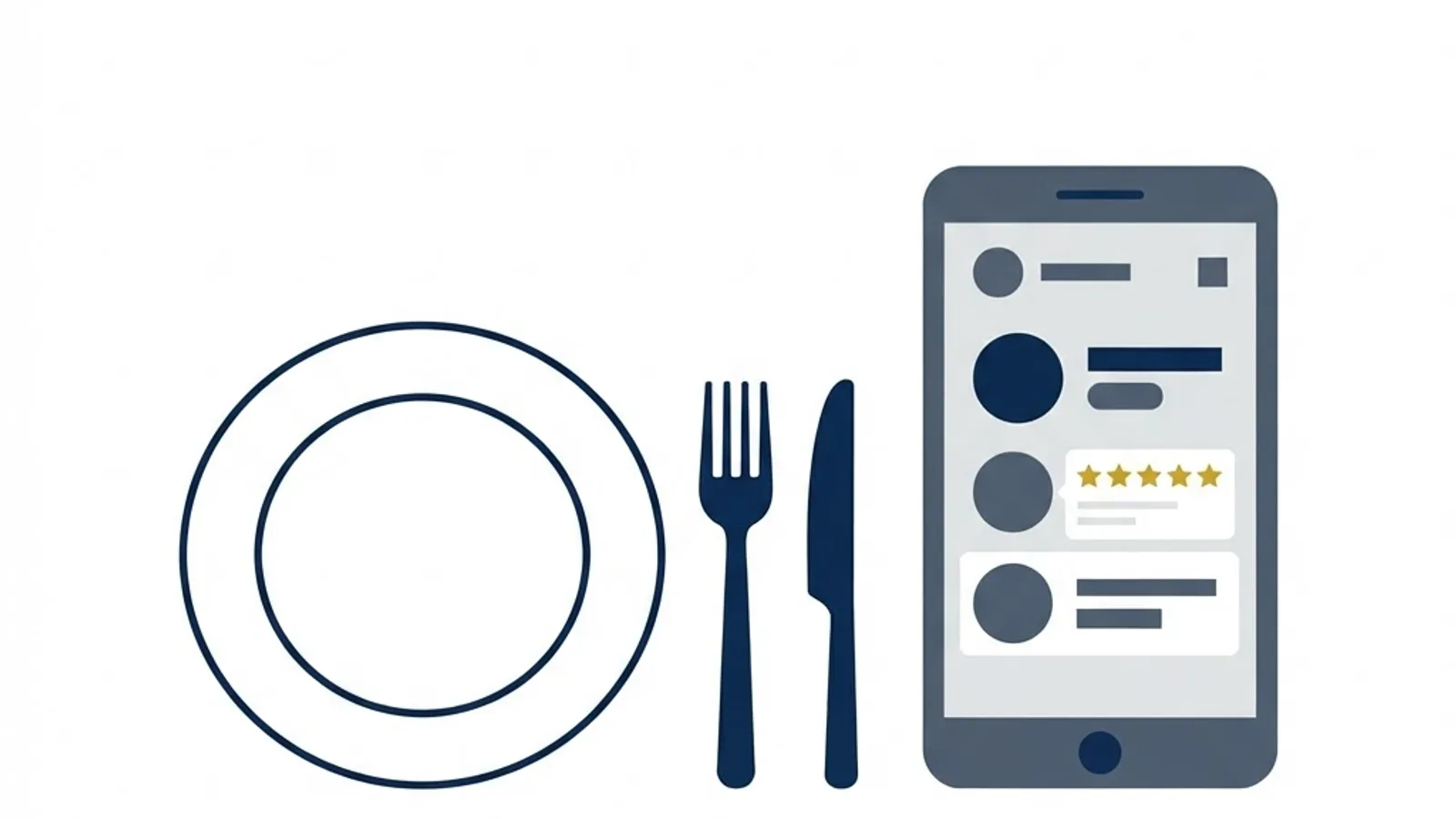
Diners read the most recent reviews, not the average. A restaurant with a 4.3 rating and twenty reviews this month outperforms one with a 4.6 and nothing since last year. Responding publicly to criticism — briefly, without defensiveness — reassures far more readers than it placates.
How to Get Started
Start with the assets that affect every channel simultaneously, then expand outward.
- Update your Google Business Profile with correct hours, menu links, attributes, and at least twenty fresh photos.
- Commission or shoot new food photography covering your ten highest-margin dishes.
- Audit your website on a phone: can someone see the menu and book a table in three taps?
- Set up a review request system tied to receipts or reservation confirmations.
- Build an email or SMS list with a simple in-venue incentive.
- Run geo-targeted social ads around peak decision times rather than all day.
- Track covers and direct orders weekly against marketing activity to see what moves.
Benefits of Professional Restaurant Marketing
The returns are unusually measurable in hospitality because footfall responds quickly.
- Higher off-peak occupancy through targeted promotions rather than blanket discounting
- Improved margin by shifting orders from commission-heavy platforms to direct channels
- Stronger catering and events revenue, which is often ignored despite better profitability
- Reduced dependence on any single platform's algorithm or fee structure
- A content library that keeps working long after the shoot is paid for
Potential Challenges
Restaurant marketing has failure modes that generic advice tends to ignore.
- Discount dependency, where promotions train customers to wait for offers
- Staffing constraints that make a successful campaign feel like a crisis on the floor
- Platform fee creep on delivery apps that quietly erodes the gains marketing produces
- Seasonality that makes month-over-month comparisons misleading without year-over-year context
Best Practices for Sustainable Growth
The most profitable restaurant marketing is rarely the loudest.
- Promote signature dishes with strong margins instead of advertising the whole menu
- Refresh photography at least twice a year so content does not visibly age
- Own your customer list; algorithm reach is rented, email and SMS are not
- Coordinate every campaign with the kitchen and floor manager before launch
Real-World Example
A neighbourhood Thai restaurant was doing steady dinner service but nearly empty lunches. Roughly seventy percent of its takeaway volume came through delivery apps charging commissions that left barely anything behind.
The strategy avoided discounts entirely. The team shot a bright photo set of six lunch dishes, added a dedicated lunch page with a fifteen-minute pickup promise, ran ads targeting office buildings within a mile between 10:30 and 12:15, and printed a small card in every delivery bag offering a free side on direct orders. Lunch covers roughly doubled over ten weeks, and direct orders rose from twelve percent to thirty-four percent of takeaway volume — worth more to the owner than the cover increase itself.
Why It Matters
Hospitality is one of the few industries where marketing performance can be observed the same evening. That immediacy is an advantage, but it also punishes neglect quickly. A restaurant that stops posting, stops collecting reviews, or lets its hours go stale becomes invisible within weeks.
Consistent digital presence is not vanity work. It is the modern equivalent of a well-lit sign on a busy street, and it now determines who walks through the door.
Frequently Asked Questions
How much should a restaurant spend on digital marketing?
Independent restaurants typically allocate three to six percent of revenue, with new openings spending more during the first six months. Prioritise photography and local search before paid advertising, since both improve every channel at once.
Is social media or local SEO more important for restaurants?
Local search usually drives more immediate covers because it captures people already deciding where to eat. Social media builds desire and brand personality that feeds future searches. Neither replaces the other, but if the budget only supports one, start with search and maps.
Should restaurants leave delivery apps entirely?
Rarely. Apps provide discovery that is hard to replicate. The smarter approach is using them for acquisition while steadily converting repeat customers to direct ordering through inserts, loyalty perks, and faster pickup.
How do you handle a damaging negative review?
Respond within twenty-four hours, acknowledge the specific issue without excuses, and move the conversation offline. Future diners judge the response more than the complaint, and calm accountability reads as competence.
Conclusion
A capable digital marketing agency for restaurants does not chase trends. It makes your food look as good online as it tastes, keeps your information accurate everywhere, and removes every obstacle between hunger and a booking.
If your dining room is quieter than it should be, audit your photos, your hours, and your mobile ordering flow before anything else. Pairing those fixes with a focused local digital marketing plan for hospitality tends to fill tables faster than any discount ever will.