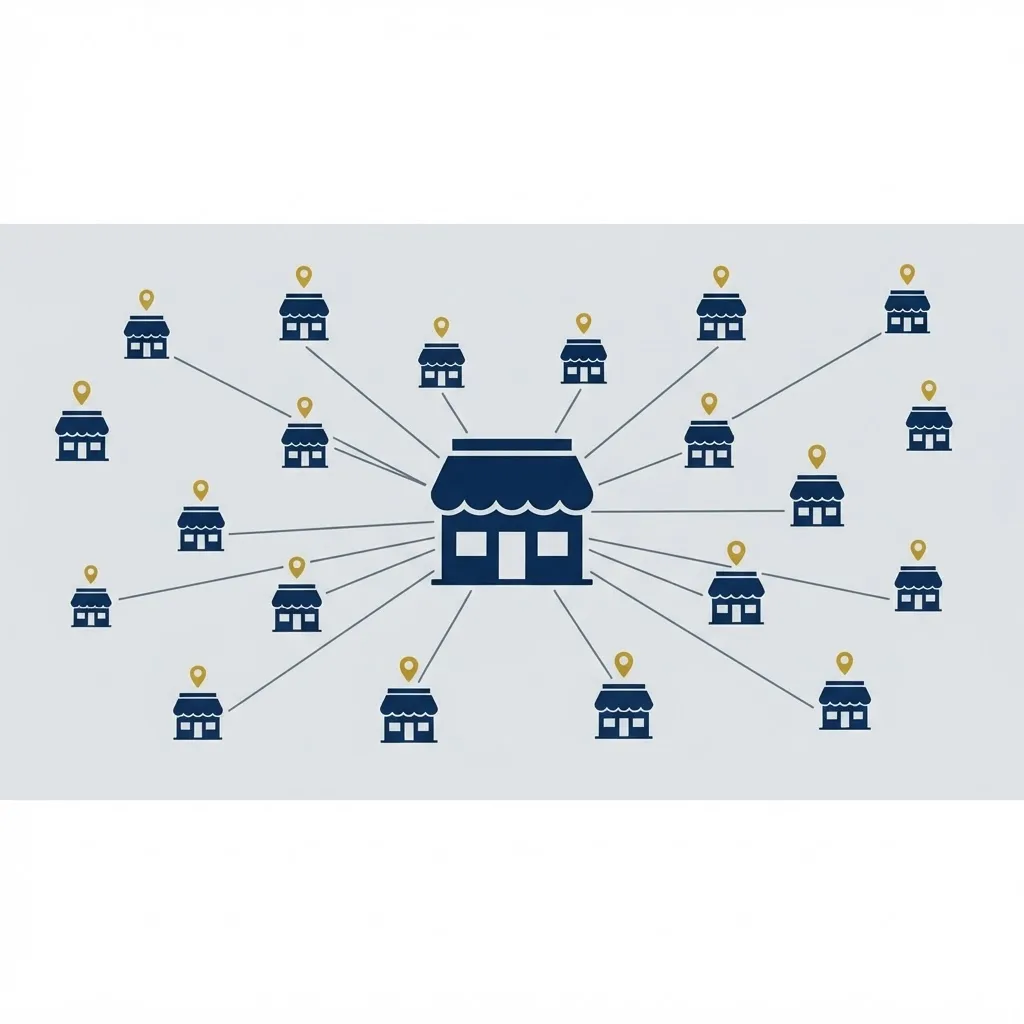
Marketing a franchise is not marketing a single business many times over. It is managing a constant tension between corporate brand consistency and the local realities each franchisee faces. A specialized franchise digital marketing agency exists specifically to hold both sides together.
Get it wrong and you end up with two failure modes. Either corporate locks everything down and local owners get leads that never fit their market, or every location freelances and the brand fragments into forty different identities.
This guide explains how franchise marketing really works, what to look for in an agency partner, and how to build a system that satisfies both headquarters and the people paying royalties.
What Is a Franchise Digital Marketing Agency?
A franchise digital marketing agency is a partner built to run campaigns across many locations under one brand, with shared assets, centralized reporting and local execution. They handle national brand campaigns, franchisee-level local search, territory-aware ad targeting and compliance review.
The defining capability is scalable localization. The same campaign must feel locally relevant in fifty markets while remaining legally and visually consistent everywhere.
Generalist agencies typically struggle here, not because of skill, but because their workflows assume one client with one website and one ad account.
Who Needs This Kind of Partner?
Franchise marketing needs scale differently depending on system size and structure.
- Emerging franchisors with five to twenty-five units establishing their first playbook
- Established systems managing national funds and local co-op contributions
- Multi-unit operators running several territories under one ownership group
- Home service franchises where lead routing by territory is business critical
- Food and retail concepts driving foot traffic to specific store locations
Core Capabilities to Look For
Multi-Location Local Search Management
Managing hundreds of Google Business Profiles, keeping hours accurate, handling duplicate listings and distributing review responses is operational work, not creative work. Ask exactly how they handle it at volume and what happens when a franchisee changes address.
Brand-Compliant Asset Libraries
Franchisees need self-service access to approved creative they can customize within guardrails. Strong systems provide templated social media post and banner design that local owners can personalize without breaking brand standards.
Territory-Aware Media Buying
Ad targeting must respect territory boundaries to avoid one franchisee paying for leads in another's protected area. This requires disciplined geo-fencing and clear escalation rules when territories overlap in dense metros.
Unified Reporting With Local Views
Corporate needs system-wide performance; franchisees need their own numbers. A single dashboard with permission-based views prevents the endless spreadsheet requests that consume franchise marketing teams.
How to Evaluate and Onboard an Agency
Selection should test operational capacity, not just campaign creativity.
- Document your current unit count, growth plan and how marketing funds are collected.
- Ask each agency for a reference from a franchise system of similar size and vertical.
- Request a live walkthrough of their multi-location dashboard, not a screenshot deck.
- Test their onboarding process by piloting with five to ten locations first.
- Define what franchisees can customize and what is locked before launch.
- Set a quarterly review cadence that includes franchisee satisfaction, not just lead counts.
Benefits of Specialized Franchise Support
The right partner changes the internal dynamic between corporate and the field almost immediately.
- Consistent brand presentation across every market and channel
- Lower per-location cost through shared creative and consolidated media buying
- Faster new unit launches with a repeatable marketing opening package
- Reduced franchisee complaints thanks to transparent, location-level reporting
- Better franchise sales, since strong marketing support is a recruitment selling point
Potential Challenges
Franchise marketing has political dimensions that pure performance marketers underestimate.
- Franchisees who opt out of programs, creating coverage gaps in key markets
- Disputes over lead attribution when territories border one another
- Legal review requirements that slow campaign launches considerably
- Wide performance variance between strong and weak operators using identical campaigns
Best Practices and Tips
These practices consistently reduce friction across franchise systems of every size.
- Publish a clear marketing playbook so expectations are documented, not verbal
- Share wins from high-performing locations to create peer pressure rather than mandates
- Keep the approved asset library genuinely useful and updated seasonally
- Measure lead-to-close by location so poor sales execution is not blamed on marketing
Real-World Example
A thirty-four unit mobile auto detailing franchise had every owner running their own ads. Costs per lead ranged from eleven dollars to ninety-four, branding was inconsistent, and six locations had unclaimed Google profiles with wrong phone numbers.
Corporate centralized listings management, built one templated landing page system with automatic location swapping, and consolidated paid search into a single managed account with territory-level budgets. Average cost per lead settled near nineteen dollars system-wide, three previously struggling locations became profitable within two quarters, and franchisee satisfaction scores on marketing support rose from the lowest rated category to the second highest.
Why It Matters
Franchise systems live or die on unit economics. When marketing works consistently across locations, franchisees renew, refer new candidates and reinvest in additional territories.
A capable franchise digital marketing agency is not just a vendor. It becomes part of the value proposition you sell to prospective franchisees.
Frequently Asked Questions
Should marketing be centralized or left to franchisees?
A hybrid works best. Centralize brand, listings, website infrastructure and media buying, while allowing franchisees controlled local customization for events, promotions and community involvement.
How are marketing funds usually structured?
Most systems collect a national brand fund plus local or regional co-op contributions, both defined as a percentage of gross revenue in the franchise agreement. Transparency in how funds are spent is critical to franchisee trust.
Can one website serve all locations?
Yes, and it usually should. A single domain with dedicated location pages concentrates authority far better than separate microsites, which compete with each other in search results.
What if a franchisee refuses to participate?
Check your franchise agreement for mandatory program clauses, but persuasion beats enforcement. Showing verified results from comparable locations converts skeptics more reliably than contract threats.
Conclusion
The best franchise marketing balances control with flexibility, delivering consistent brand presence while respecting that every territory has its own competitive reality. Choose a partner with proven multi-location operations, not just impressive creative work.
Start with a pilot group, prove the model, then roll it out system-wide. Systems that also need a scalable site architecture can explore multi-location back-end web development to support growth.