Hypermarketing is what happens when personalisation stops being a merge field and becomes an operating model. Instead of sending one message to a segment, the system assembles a different message for each person, in the moment, based on what they just did.
The idea is not new. What changed is that the data infrastructure and machine learning required to execute it are now affordable for mid-sized companies, not just enterprises with nine-figure marketing budgets.
This article explains what hypermarketing actually involves, which businesses genuinely benefit, how to build toward it in stages, and where the approach tips from helpful into unsettling.
What Is Hypermarketing?
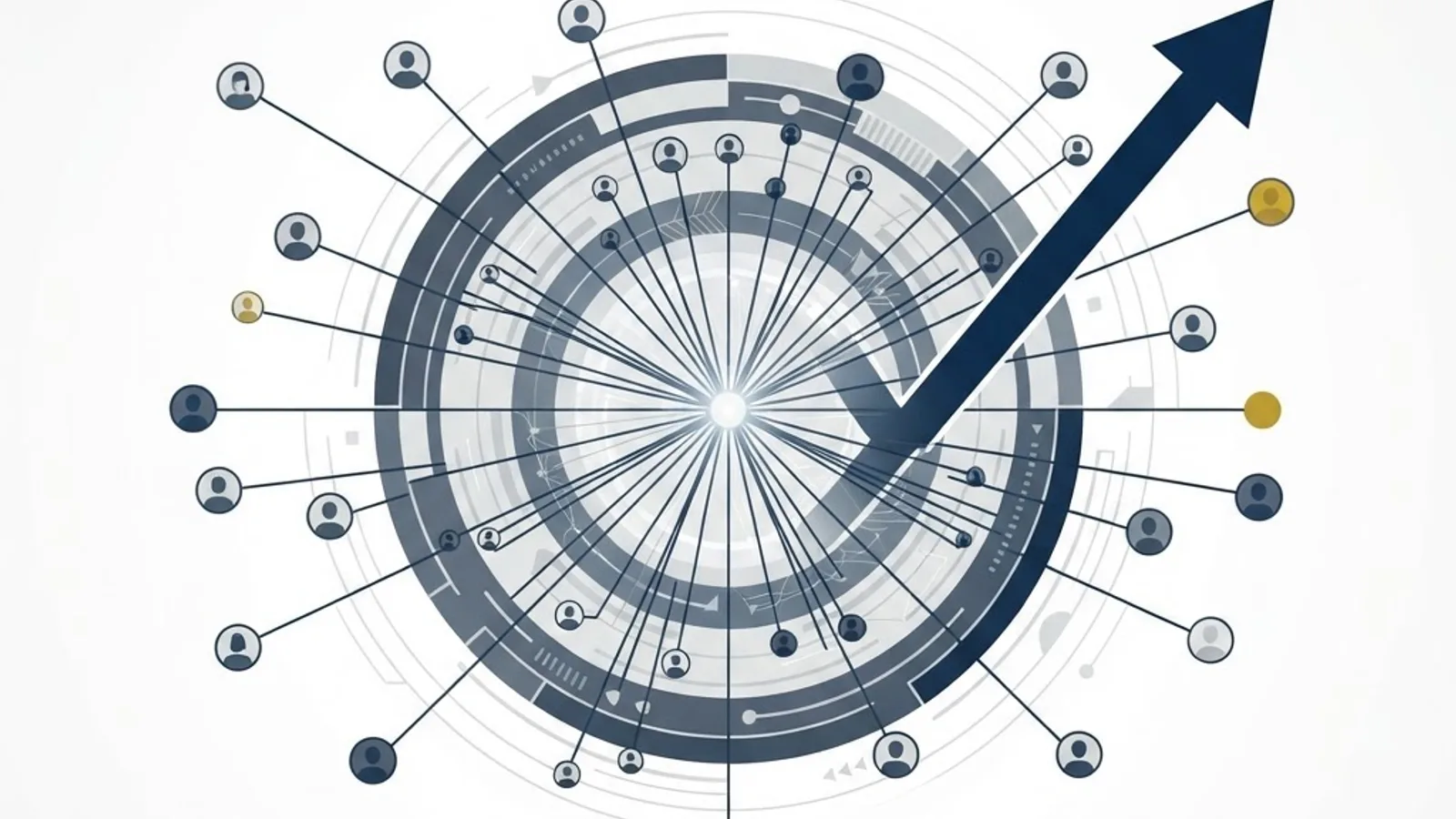
Hypermarketing is the practice of tailoring marketing content, timing, channel, and offer to an individual using real-time behavioural and contextual data rather than static demographic segments. It treats each customer as a segment of one.
A conventional campaign might email everyone who browsed running shoes. A hypermarketing system notices that a specific customer viewed trail shoes three times on mobile during commuting hours, has previously bought in a half size, and lives somewhere with a wet forecast — then adjusts the message, image, and send time accordingly.
The defining shift is from batch decisions to continuous decisions. Nothing is scheduled weekly and left alone. The system re-evaluates with every interaction.
Who Uses It?
Hypermarketing requires data volume and repeat interaction to be worth the investment. Businesses with a single annual transaction and few digital touchpoints will struggle to justify it.
- Retail and ecommerce brands with large catalogues and frequent repeat purchases
- Subscription services optimising onboarding, engagement, and churn prevention
- Financial and insurance providers matching products to life events
- Travel and hospitality companies where timing and context drive booking behaviour
- Media platforms where every impression is a personalisation decision
Key Features
Unified Customer Data
Everything depends on a single view of the customer stitched across web, app, email, support, and purchase history. Without that foundation, personalisation fragments into contradictory messages from different systems, which feels worse than no personalisation at all.
Real-Time Decisioning
A decision engine evaluates available content and offers against the current context and selects the best option in milliseconds. This is where applied artificial intelligence services earn their keep, because the number of possible combinations far exceeds what rules alone can manage.
Modular Content Assembly
You cannot hand-write a million variants. Content is broken into interchangeable components — headline, hero image, proof point, offer, call to action — which the system recombines. Creative teams design the system rather than the output.
Continuous Experimentation
Multi-armed bandit testing replaces sequential A/B tests, shifting traffic toward winning variants while learning continues. The programme never really finishes; it just keeps refining.
How to Get Started
Attempting full hypermarketing in one project almost always fails. The productive route is incremental, proving value at each stage.
- Audit where customer data currently lives and identify the duplication and gaps.
- Consolidate identity resolution so the same person is recognised across devices and channels.
- Pick one high-value moment — cart abandonment, trial day three, post-purchase — and personalise only that.
- Break the creative for that moment into modular components with clear rules about which combinations are valid.
- Instrument measurement properly, with a holdout group that receives the old experience.
- Introduce automated decisioning once you have enough volume for the model to learn from.
- Expand to a second moment only after the first shows a durable lift beyond novelty.
- Review outputs regularly for tone, accuracy, and anything that reads as intrusive.
Benefits
When the foundations are solid, the gains show up across several metrics simultaneously rather than in one isolated channel.
- Higher conversion rates because the offer matches current intent rather than past averages
- Reduced message fatigue, since customers receive fewer irrelevant communications
- Improved retention through timely intervention before churn signals become churn
- More efficient media spend as budget shifts toward genuinely responsive audiences
- Better performance from behaviour-triggered email programmes, which become the highest-margin channel in most hypermarketing stacks
Potential Challenges
The failure modes here are distinctive and worth naming before you start.
- Data quality problems scale with automation — bad inputs now produce bad messages at speed
- Privacy regulation restricts what can be collected, retained, and inferred across jurisdictions
- Personalisation that reveals inferred sensitive information damages trust irreversibly
- Engineering complexity grows quickly, demanding infrastructure that many marketing teams do not control
Best Practices and Tips
The teams that succeed tend to be conservative about what they personalise and aggressive about how well they measure it.
- Personalise usefulness before personalising intimacy — relevance of product beats naming someone's hometown
- Give customers visible, easy control over preferences and frequency
- Always maintain a holdout group so you can prove the programme creates incremental value
- Build performant delivery infrastructure; personalisation that slows page load erases its own gains, which is why teams often move to a modern Next.js application architecture
- Document every inference the system makes so you can explain a decision when a customer asks
Real-World Example
A mid-sized speciality food retailer ran the same weekly promotional email to its entire list of two hundred thousand subscribers. Open rates hovered around eighteen percent and unsubscribes crept up each quarter.
They started small. Rather than rebuilding everything, they personalised a single element: the three featured products, selected per subscriber based on previous category purchases and recent browsing. Send time was also individualised based on each subscriber's historical open hour.
Open rates rose to twenty-nine percent within two months and revenue per email roughly doubled against a maintained holdout group. Crucially, unsubscribes fell. The company had not sent more email — it had sent less irrelevant email. That single change funded the broader data consolidation work that followed.
Why It Matters
Customer tolerance for generic messaging keeps declining while inbox and feed competition keeps rising. The practical consequence is that undifferentiated campaigns are not merely less effective than they were; they are increasingly filtered out before a human sees them.
At the same time, the tooling gap between large enterprises and everyone else has narrowed considerably. Much of the decisioning capability that required a dedicated data science team five years ago is now available through integrated AI implementation services. Hypermarketing is becoming a baseline expectation rather than a competitive edge.
Frequently Asked Questions
Is hypermarketing just personalisation with a new name?
It is personalisation extended to real time, across channels, and driven by automated decisioning rather than manually authored rules. The difference is one of degree that becomes a difference in kind once decision volume exceeds what humans can specify.
Do I need a huge customer base to start?
You need enough interaction volume for patterns to emerge, but the starting point can be modest. Personalising a single high-traffic moment works with tens of thousands of interactions, not millions.
How do I avoid seeming creepy?
Follow a simple test: would the customer be comfortable if you explained exactly how you knew this? Referencing browsing on your own site is fine. Referencing inferred health status, financial difficulty, or location precision usually is not.
What does it cost to implement?
Costs concentrate in data infrastructure and engineering rather than in media. Many organisations spend the first six months purely on consolidating customer data before any personalisation goes live, and that phase is unavoidable.
Conclusion
Hypermarketing rewards patience. The organisations getting real value from it did not launch with a hundred personalised journeys; they personalised one important moment properly, measured it honestly, and expanded from proven ground.
Start with clean data, one high-value interaction, and a holdout group you never delete. If your infrastructure is the bottleneck, look at strengthening the back-end systems that personalisation depends on.