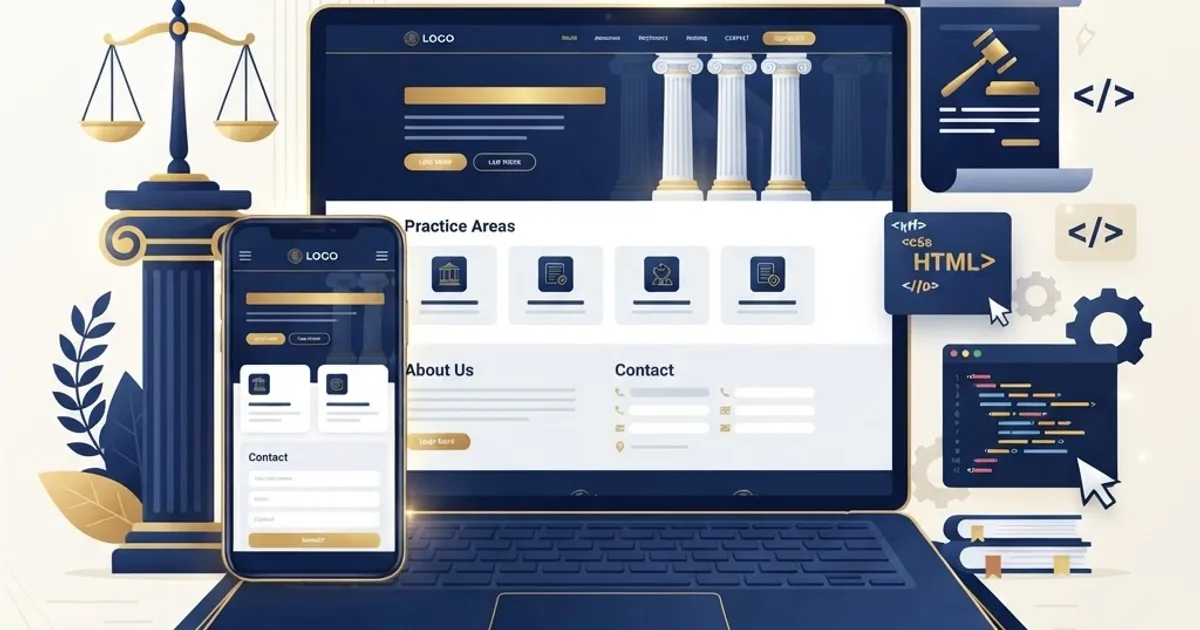
For law firms, a website is no longer a digital business card — it's often the first and most decisive interaction a potential client has with the practice. When someone is dealing with a legal problem, they're anxious, they're researching quietly, and they're judging credibility within seconds. A polished, trustworthy, well-structured website can be the difference between a booked consultation and a bounce to a competitor.
That's exactly why so many practices work with a dedicated law firm web design and development agency rather than a generalist. Legal marketing has its own rules, its own client psychology, and its own ethical constraints. This guide explains what a specialized agency does differently, the features that actually move the needle for law firms, the process behind a great legal website, and how to choose the right partner for your practice.
Table of Contents
- Why law firms need specialized web design
- What a law firm web design agency delivers
- Essential features of a high-performing legal website
- The design and development process
- SEO and lead generation for law firms
- Compliance, security, and trust
- How to choose the right agency
- Frequently asked questions
- Final thoughts
Why Law Firms Need Specialized Web Design
Legal services are a high-stakes, high-trust purchase. Unlike buying a product, hiring a lawyer means placing something deeply important — your freedom, finances, family, or business — in someone else's hands. That psychology shapes everything about how a law firm website should be designed.
A generalist designer might build an attractive site, but a specialized law firm web design and development agency understands the nuances: how to convey authority without arrogance, how to make complex practice areas approachable, how to guide anxious visitors toward a consultation, and how to stay within the advertising rules that govern legal marketing.
This specialization matters because the details compound. The right tone, clear practice-area pages, prominent attorney credentials, genuine testimonials (where permitted), and frictionless contact options all work together to build the trust that turns a visitor into a client. That's the core of Google's E-E-A-T framework in action — demonstrating real experience, expertise, authoritativeness, and trustworthiness, which is doubly important for the legal 'Your Money or Your Life' category that Google scrutinizes closely.
What a Law Firm Web Design Agency Delivers
A full-service agency does far more than make a firm's website look modern. It aligns design, technology, content, and marketing around the goal of attracting and converting the right clients.
On the design side, that means a professional, credible visual identity through expert website design that reflects the firm's standing. On the technical side, it means fast, secure, reliable performance through solid front-end web development and robust back-end web development that keeps sensitive contact data safe.
It also means content that educates and reassures. Clear, authoritative practice-area pages and helpful legal articles — often produced with professional content writing — demonstrate expertise and improve search visibility. And because a website is a living asset, a good agency provides ongoing website maintenance and support so the site stays fast, secure, and current long after launch.
In short, the agency acts as a single accountable partner across design, development, content, and growth — removing the coordination burden from busy attorneys.
Essential Features of a High-Performing Legal Website
Certain features consistently separate law firm websites that generate consultations from those that merely exist online.
Clear practice-area pages. Each area of law should have its own dedicated, well-written page so visitors immediately see that the firm handles their specific issue and so search engines can rank the firm for relevant queries.
Prominent attorney profiles. Detailed bios with credentials, experience, and a professional photo humanize the firm and build the trust that drives hiring decisions.
Easy, multiple contact options. Click-to-call, visible phone numbers, and simple consultation request forms reduce friction for anxious visitors ready to reach out.
Trust signals. Awards, bar memberships, case results (where ethically permitted), and genuine client testimonials reinforce credibility.
Mobile-first, fast, accessible design. Many prospective clients search on their phones in stressful moments, so the site must load quickly, work flawlessly on mobile, and meet accessibility standards. Supporting visuals like a clear infographic design can make complex legal processes easier to understand at a glance.
The Design and Development Process
A professional agency follows a structured process that turns a firm's goals into a high-performing website, minimizing surprises and rework.
Discovery and strategy. The agency learns the firm's practice areas, ideal clients, competitors, and goals, then defines the site's structure and messaging strategy.
Content and information architecture. Pages are mapped so visitors can find what they need quickly, and content is planned to satisfy both users and search engines.
Design. Wireframes and visual designs establish a professional, trustworthy look that reflects the firm's brand and reassures visitors.
Development. Designers' work is built into a fast, secure, responsive website. Firms wanting easy self-management often choose a WordPress development build, while those wanting a modern, highly customized site may opt for a React JS or Next JS approach.
Testing and launch. Rigorous testing across devices and browsers ensures everything works before go-live, followed by ongoing optimization and support.
SEO and Lead Generation for Law Firms
A beautiful law firm website is only valuable if prospective clients can find it. Legal keywords are among the most competitive online, so search visibility requires a deliberate, ongoing strategy.
Effective legal SEO combines technically sound site structure, authoritative practice-area content, local optimization for the firm's service areas, and consistent publishing of helpful legal articles. Together these signal expertise to Google and capture the searches prospective clients actually make.
Beyond organic search, many firms accelerate growth with broader digital marketing, targeted email marketing to nurture inquiries, and a professional presence through social media management. A specialized agency coordinates these channels so the website sits at the center of a complete client-acquisition system rather than standing alone.
Compliance, Security, and Trust
Law firm websites carry responsibilities that most businesses don't. Legal advertising is governed by bar association rules that vary by jurisdiction, covering things like disclaimers, claims about results, and testimonials. A specialized agency builds with these rules in mind, helping the firm stay compliant while still marketing effectively.
Security is equally critical. Prospective clients submit sensitive personal information through contact forms, so encryption, secure hosting, and careful data handling are essential — the domain of experienced back-end web development and diligent cybersecurity practices.
Ongoing website maintenance and support keeps the site patched against vulnerabilities and ensures it stays compliant as rules and technology evolve. For a profession built on trust, cutting corners here isn't an option — and clients notice when a firm's digital presence feels secure and professional.
How to Choose the Right Agency
Not every web agency understands the legal industry, so choosing the right partner requires looking beyond a slick sales pitch.
Look for relevant experience — an agency that has built law firm websites will understand the psychology, compliance, and competitive dynamics far better than a generalist. Ask to see legal work samples and results.
Evaluate whether they offer end-to-end service. A partner who handles website design, development, content, SEO, and ongoing support removes the friction of juggling multiple vendors and keeps everything aligned.
Assess communication during the sales process itself. If an agency is responsive, clear, and consultative before you've signed, that's a strong sign of how they'll work afterward. Finally, confirm they think beyond launch — a website needs maintenance, security, and marketing to keep delivering clients, so a true long-term partner is worth far more than a one-off vendor.
Frequently Asked Questions
1. Why should a law firm hire a specialized web design agency instead of a generalist? Specialized agencies understand legal client psychology, advertising compliance rules, and the competitive nature of legal search. That expertise produces websites that build trust and generate consultations more effectively than a generic build.
2. How much does a law firm website cost? Costs vary with scope, from a professional multi-page site to a highly customized platform. Because legal websites demand strong design, content, security, and SEO, they're an investment — but one that pays off through client acquisition. Always request a detailed proposal.
3. How long does it take to build a law firm website? A typical professional law firm website takes several weeks to a few months depending on the number of practice areas, content needs, and customization involved.
4. Do I need separate pages for each practice area? Yes. Dedicated practice-area pages help visitors quickly confirm the firm handles their issue and significantly improve search rankings for relevant legal queries.
5. Will my law firm website be compliant with advertising rules? A specialized agency builds with bar association advertising rules in mind, including appropriate disclaimers and careful handling of results and testimonials. Final compliance responsibility rests with the firm, so collaboration is key.
6. How do law firm websites generate new clients? Through a combination of trustworthy design, clear calls-to-action, authoritative content, strong local SEO, and easy contact options that convert anxious searchers into booked consultations.
7. Is ongoing maintenance necessary after launch? Absolutely. Legal websites handle sensitive data and operate in a regulated space, so ongoing maintenance, security updates, and content refreshes are essential to stay secure, compliant, and competitive.
Final Thoughts
For a law firm, the website is often the deciding factor in whether a prospective client picks up the phone. Building one that earns trust, communicates authority, and converts anxious visitors into consultations takes more than good looks — it takes a partner who understands the legal industry's unique psychology, competition, and compliance demands.
A specialized law firm web design and development agency brings that understanding together with design, development, content, security, and marketing under one roof. The result is a website that works as a genuine client-acquisition engine, not just an online brochure.
If your firm is ready for a website that reflects your reputation and brings in the right clients, our team would be glad to help. Reach out for a confidential consultation and let's build a digital presence worthy of your practice.