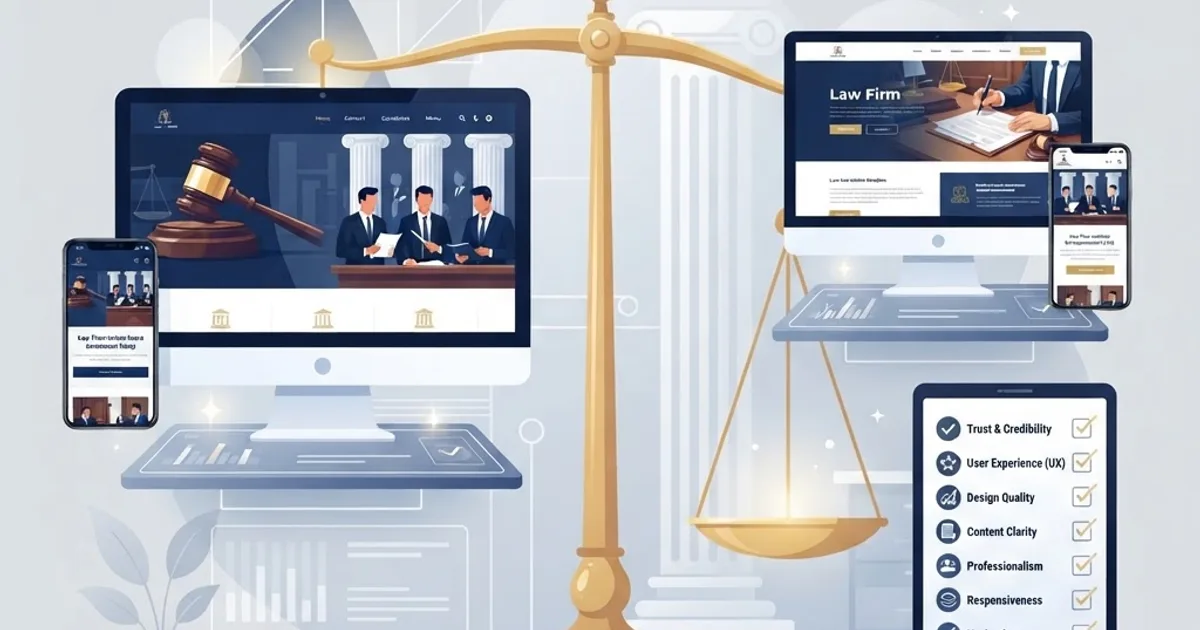
When you search for the best law firm web design companies, you get a wall of agencies all claiming to be the top choice. Every one of them promises more cases, higher rankings, and a beautiful website. The hard part isn't finding options — it's telling the genuinely excellent partners apart from the ones that simply market themselves well.
This guide takes a different approach. Instead of handing you a ranked list that goes stale the moment it's published, it gives you a durable framework for evaluating any law firm web design company on its merits. By the end, you'll know exactly what separates a great legal web partner from an average one, what you should expect to pay, and the specific questions that reveal whether an agency truly understands the practice of law.
Table of Contents
- Why law firms need specialized web design
- What the best law firm web design companies have in common
- The core services to look for
- Red flags that signal a weak partner
- Questions to ask before you hire
- What great legal web design costs
- How to make your final decision
- Frequently asked questions
- Final thoughts
Why Law Firms Need Specialized Web Design
Legal web design is a discipline of its own. A law firm website has to do something most business sites never attempt: earn the trust of someone in a stressful, high-stakes moment. A person searching for a defense attorney at midnight, or a family looking for an estate lawyer after a loss, isn't casually browsing. They need reassurance, clarity, and a fast, obvious way to get help.
On top of that, legal marketing carries rules. State bar associations regulate what attorneys can claim, how testimonials are handled, and what disclaimers must appear. A general web design shop that has never worked with law firms can unknowingly create compliance problems that put your license at risk. The best law firm web design companies understand these constraints and build within them from the start.
This is why specialization matters so much in this niche. A generalist can make a pretty site. A specialist builds a site that converts anxious visitors into consultations while keeping you on the right side of advertising rules.
What the Best Law Firm Web Design Companies Have in Common
Across the legal web design landscape, the strongest companies share a recognizable set of traits. Learning to spot these makes any evaluation far easier.
Legal industry focus. They can show you multiple recent law firm websites, ideally in your practice area. A portfolio full of restaurants and gyms with a single lawyer site tacked on is not the same thing.
Conversion-first thinking. They talk about intake, consultation bookings, and case value — not just colors and fonts. They understand that a legal website is a client-acquisition tool, not a digital brochure.
Technical excellence. Fast load times, clean code, mobile-first layouts, and strong accessibility. Google's ranking systems reward genuinely helpful, fast, accessible pages, and the best firms build to those standards using solid front-end web development and dependable back-end web development.
Content and SEO capability. They understand legal search intent and can produce practice-area pages and blog content that ranks. Many pair design with dedicated content writing and digital marketing so the site actually gets found.
Ongoing partnership. They offer maintenance, security updates, and iteration after launch rather than disappearing once the invoice is paid.
The Core Services to Look For
A top-tier law firm web design company should offer an integrated stack rather than design in isolation. When services are fragmented across multiple vendors, things fall through the cracks.
At minimum, look for custom design tailored to your firm's brand, responsive development, content management so your team can post updates, search optimization, and secure hosting with maintenance. Firms that build on flexible platforms — whether that's a well-configured WordPress development setup or a modern framework like React JS or Next JS — give you room to grow.
The very best partners go further, offering supporting services like infographic design to explain complex legal processes visually, social media posts and banner design to keep your brand consistent across channels, and website maintenance and support so your site stays secure and current long after launch.
Red Flags That Signal a Weak Partner
Knowing what to avoid is just as valuable as knowing what to seek. Watch for these warning signs during your search.
No relevant portfolio. If an agency can't show recent law firm work, treat their legal expertise as unproven.
Template-only offerings. Some 'companies' simply resell the same cookie-cutter template to dozens of firms. Your competitors may end up with a nearly identical site.
Vague pricing and no scope. A refusal to explain what's included, or pressure to sign before you understand deliverables, is a bad sign.
They own your assets. If the contract means you don't own your domain, content, or site after you leave, walk away.
All talk about design, none about results. If nobody mentions how the site will generate consultations, the agency sees you as a design job, not a growth partner.
No accessibility or compliance awareness. Legal advertising rules and ADA accessibility both matter. Silence on these topics is a red flag.
Questions to Ask Before You Hire
The right questions quickly separate strong candidates from weak ones. Bring these to every consultation.
- Can you show me law firm websites you've built in the last year, ideally in my practice area?
- Who owns the website, content, and domain when the project ends?
- How do you approach intake and consultation conversions specifically?
- What's your process for legal advertising compliance and disclaimers?
- How do you handle accessibility (ADA/WCAG) requirements?
- What's included in ongoing maintenance, and what does it cost?
- How do you measure success after launch, and how will you report it to me?
- What is realistic to expect for load speed and Core Web Vitals?
Pay attention not just to the answers but to how confidently and specifically they respond. A specialist answers these fluently; a generalist hesitates.
What Great Legal Web Design Costs
Pricing for law firm web design spans a wide range, and understanding the tiers helps you set realistic expectations. At the entry level, a template-based site with light customization is the most affordable option, suitable for solo practitioners with modest needs. A custom-designed website for an established firm — with multiple practice-area pages, professional content, and a strong intake flow — sits in the mid range. Large multi-location firms or those needing advanced functionality, integrations, and aggressive SEO occupy the premium tier.
Beyond the build, factor in ongoing costs: hosting, security, maintenance, content updates, and marketing. The cheapest option rarely delivers the best return. A well-built site that consistently generates consultations pays for itself many times over, while a bargain site that ranks poorly and converts badly is the more expensive choice in the long run.
The smartest question isn't 'What's the cheapest?' It's 'What's the return?' A legal website is a client-acquisition asset, and its value should be measured in the cases it brings in, not just its upfront price.
How to Make Your Final Decision
Once you've shortlisted two or three strong candidates, base your final decision on fit rather than flash. Weigh their legal experience, the strength and relevance of their portfolio, the clarity of their process, and how well they communicate. The partner who explains things clearly and asks smart questions about your firm will almost always serve you better than the one with the flashiest sales pitch.
Ask each finalist to walk you through a recent project from kickoff to launch and beyond. The way they describe collaboration, revisions, and post-launch support tells you what working with them will actually feel like. Check references and, where possible, talk to a current client about responsiveness and results.
Finally, trust the relationship. You'll be working closely with this team, sometimes for years. Choose the company that treats your firm's growth as their responsibility, not just a line item.
Frequently Asked Questions
1. What makes a web design company good for law firms specifically? Legal specialization matters most: understanding bar advertising rules, building trust with anxious visitors, optimizing for consultation conversions, and knowing how people search for legal help. A relevant, recent portfolio is the clearest proof.
2. How do I verify a company's law firm web design experience? Ask for live examples of law firm sites built in the last year, request client references you can actually contact, and check independent review platforms. Be wary of portfolios that show only mockups rather than launched sites.
3. Should I hire a specialized legal web design company or a general agency? For most firms, a specialist is worth it. They already understand compliance, legal search intent, and intake conversion, which saves time and reduces risk compared to educating a generalist.
4. How much should a law firm expect to invest in a website? It varies widely by scope. Solo practitioners can start modestly with a customized template, while established firms investing in custom design, content, and SEO should budget more. Always weigh cost against the expected return in new cases.
5. Do the best companies also handle SEO and content? The strongest partners either provide search optimization and content writing in-house or coordinate it tightly with design. A beautiful site that no one finds won't grow your practice.
6. How long does a professional law firm website take to build? A customized template site can launch in a few weeks, while a fully custom, content-rich site typically takes two to four months depending on the number of pages and revision cycles.
7. What ongoing services should I expect after launch? Look for security updates, backups, uptime monitoring, and content support through a maintenance plan such as website maintenance and support, plus optional marketing to keep generating leads.
8. Who should own my website and content? You should. Confirm in writing that you retain full ownership of your domain, design files, and content so you're never locked into a single vendor.
Final Thoughts
The best law firm web design companies aren't necessarily the ones with the biggest ad budgets or the loudest claims. They're the ones that combine genuine legal industry experience, conversion-focused design, technical excellence, and a real commitment to your firm's growth after launch.
Use the framework in this guide — evaluate portfolios critically, watch for red flags, ask the hard questions, and weigh cost against return. Do that, and you'll be able to look past the marketing and identify the partner who will actually help your firm attract more of the right clients.
If you want a team that builds fast, compliant, conversion-focused legal websites and stays with you well beyond launch, reach out for a consultation. Let's design a website that turns searchers into signed clients.