There's a quiet myth in the web industry that great design is about looking good. It isn't. A website can win awards for its visuals and still fail the only test that matters to a business: does it turn visitors into customers? The most valuable web design and development services aren't the ones that make the prettiest pages — they're the ones that make pages that convert.
Design that converts is a discipline. It blends persuasive psychology, clear information architecture, fast and reliable engineering, and continuous testing. This article breaks down what conversion-focused web design and development actually involves, why it consistently outperforms decoration-first design, and how to make sure the services you invest in are built to grow your business.
Table of Contents
- What 'design that converts' really means
- Why beautiful sites still fail
- The principles behind high-converting design
- How development quality affects conversions
- The conversion-focused design process
- Measuring and improving conversion rates
- Choosing services built to convert
- Frequently asked questions
- Final thoughts
What 'Design That Converts' Really Means
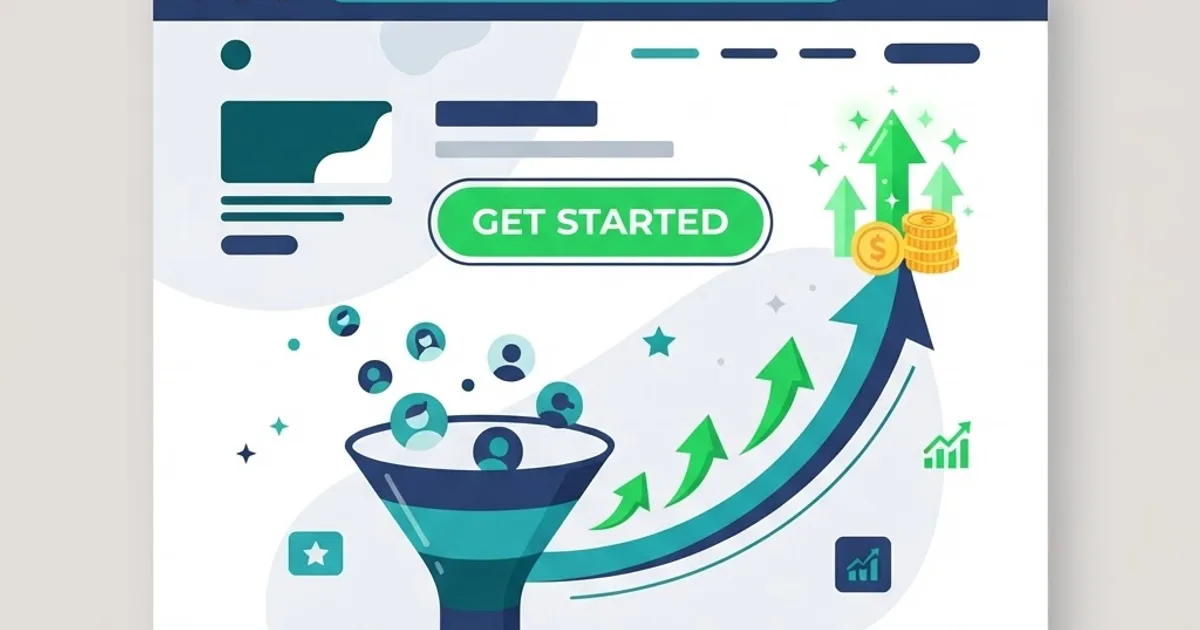
A conversion is any meaningful action you want a visitor to take: buying a product, requesting a quote, booking a call, subscribing, or filling out a form. Design that converts is design engineered to make those actions as easy, obvious, and compelling as possible while removing every unnecessary obstacle along the way.
The key word is intentional. On a converting website, nothing is there by accident. Every headline answers a question the visitor is silently asking. Every button appears at the moment of decision. Every piece of proof — reviews, results, guarantees — is placed where doubt would otherwise creep in. The design guides attention along a deliberate path toward the action, instead of leaving visitors to wander.
This is fundamentally different from decoration. Decoration asks, 'Does this look nice?' Conversion asks, 'Does this move someone closer to acting?' The best web design and development services keep that second question at the center of every decision.
Why Beautiful Sites Still Fail
Plenty of gorgeous websites convert terribly, and the reasons are predictable. Sometimes the visuals get in the way — heavy animations and huge hero images slow the page down, and visitors leave before it even loads. Sometimes the message is unclear: a stunning homepage that never plainly says what the company does or why it matters leaves people confused, and confused people don't buy.
Other times the path to action is broken. The call-to-action is vague, hidden, or missing entirely. The form asks for too much. The mobile layout, where the majority of traffic now lives, is an afterthought. In each case, the design looked impressive in a portfolio but failed the real-world visitor.
This is why aesthetics and conversion must be developed together, not traded off. Strong website design achieves both: it looks credible and modern while quietly steering visitors toward the next step. Beauty earns attention; structure earns conversions. You need both.
The Principles Behind High-Converting Design
Conversion-focused design rests on a handful of durable principles that hold true across industries.
Clarity above cleverness. Visitors should understand what you offer and what to do next within seconds. A clear headline beats a clever one every time.
Visual hierarchy that leads the eye. Size, color, contrast, and spacing guide attention toward the most important elements — usually your value proposition and your primary call-to-action.
Friction reduction. Every extra field, click, or moment of confusion costs conversions. The best designs strip the path down to the essentials.
Trust signals in the right places. Testimonials, reviews, security badges, guarantees, and real results reduce anxiety exactly where hesitation occurs.
Compelling, benefit-led copy. Words do the persuading. Strong content writing that speaks to a visitor's problem and desired outcome dramatically outperforms generic feature lists.
Mobile-first execution. With most traffic on phones, a converting site is designed for the small screen first and enhanced for larger ones.
How Development Quality Affects Conversions
Design gets the credit, but engineering quietly makes or breaks conversion rates. The most persuasive layout in the world can't convert a visitor who has already left because the page took too long to load. Speed is a conversion factor: even small delays measurably reduce completed actions and hurt search visibility through Core Web Vitals.
This is where skilled front-end web development earns its keep. Clean, optimized code produces fast load times, smooth interactions, and layouts that don't shift or break. On the server side, reliable back-end web development ensures forms submit correctly, payments process without errors, and data flows where it should — because a checkout that fails at the final step is a conversion killer.
For businesses building richer, app-like experiences, modern frameworks matter too. A React JS or Next JS build can deliver near-instant navigation and dynamic personalization, while a well-configured WordPress site offers a flexible, editor-friendly foundation. The right technical choice depends on your goals — but in every case, engineering quality is inseparable from conversion performance.
The Conversion-Focused Design Process
Design that converts follows a disciplined process rather than jumping straight to visuals. It usually begins with research: understanding the target audience, their pain points, the questions they need answered, and the objections that stop them from acting. This insight shapes everything that follows.
Next comes strategy and structure — mapping the pages and the journey a visitor takes from arrival to conversion. Wireframes define layout and hierarchy before a single color is chosen, ensuring the path to action is logical. Only then does visual design layer on brand, imagery, and polish, followed by development that turns the design into a fast, functional reality.
Crucially, the process doesn't end at launch. Conversion-focused services treat launch as the start of optimization, using real visitor behavior to refine and improve. Supporting assets like infographic design and consistent social media posts and banner design extend that persuasive design across every touchpoint a customer encounters.
Measuring and Improving Conversion Rates
You can't improve what you don't measure. Conversion-focused web design and development services instrument a site from day one, tracking where visitors come from, how they move through the site, and where they drop off. Tools like analytics platforms and heatmaps reveal the real story behind the numbers — the point where forms get abandoned, the button that gets ignored, the section where people lose interest.
From there, improvement is systematic. A/B testing compares two versions of a page or element to see which converts better, replacing guesswork with evidence. Small, continuous refinements — a clearer headline here, a shorter form there, a repositioned call-to-action — compound into significant gains over time.
This ongoing optimization is where a real growth partner separates itself from a one-off vendor. Pairing design with digital marketing ensures that the traffic arriving at your optimized pages is qualified and intent-driven, multiplying the return on every improvement.
Choosing Services Built to Convert
When evaluating web design and development services, look past the portfolio's visual polish and probe how they think about results. Do they ask about your business goals, your customers, and your conversion targets — or only about colors and layouts? Do they talk about measurement, testing, and iteration, or do they treat launch as the finish line?
The best partners are comfortable being held accountable to outcomes. They'll discuss load speed, mobile experience, form design, and analytics as naturally as they discuss typography. They'll also offer the ongoing support — through plans like website maintenance and support — needed to keep improving after launch.
Ultimately, choose the team that sees your website as a growth engine rather than a design deliverable. That mindset, more than any single technique, is what produces design that truly converts.
Frequently Asked Questions
1. What does 'design that converts' actually mean? It means designing a website specifically to guide visitors toward a desired action — a purchase, inquiry, or signup — by combining clarity, persuasive copy, trust signals, and a frictionless path to that action, rather than focusing on looks alone.
2. Can a website be both beautiful and high-converting? Yes, and the best ones are both. Visual appeal earns attention and credibility, while structure, clarity, and speed drive conversions. The two should be developed together, not traded against each other.
3. How does page speed affect conversions? Significantly. Slow pages cause visitors to leave before they act and also hurt search rankings through Core Web Vitals. Fast, well-engineered pages keep visitors engaged long enough to convert.
4. What's the difference between web design and web development in conversions? Design shapes the experience and persuasion; development makes it fast, reliable, and functional. A great design with poor development (slow pages, broken forms) will still convert badly, so both matter.
5. How do you measure whether a design converts? Through analytics and conversion tracking — measuring the percentage of visitors who complete key actions, analyzing where they drop off, and running A/B tests to compare versions and improve results over time.
6. Does conversion optimization ever end? No. Audiences, competitors, and expectations shift constantly. The best results come from treating launch as the beginning of ongoing testing and refinement, not the finish line.
7. Which platform is best for a high-converting website? It depends on your needs. WordPress offers flexibility and easy editing, while React or Next.js can deliver faster, app-like experiences. The right choice supports your goals and is executed with quality engineering.
8. How soon can I expect conversion improvements? Some gains from a well-built new site are immediate, but the biggest improvements come from ongoing optimization over weeks and months as you test, learn, and refine based on real visitor behavior.
Final Thoughts
A website is one of the hardest-working assets your business owns — but only if it's designed to convert. The prettiest site in your industry is worthless if visitors leave without acting, while a clear, fast, persuasive site quietly turns strangers into customers around the clock.
Design that converts isn't luck or artistic flair. It's the disciplined combination of audience insight, persuasive structure, quality engineering, and relentless testing. When you choose web design and development services built on those foundations, your website stops being a cost and becomes an engine for growth.
If you're ready for a website that's measured by results, not just looks, get in touch for a consultation. Let's build design that turns your traffic into revenue.