The phrase "web designer company" gets thrown around a lot, but it can mean wildly different things depending on who you ask. To one business owner it means a freelancer who builds a five-page site over a weekend. To another it means a full team of strategists, designers, developers, and marketers who treat a website as a living business asset. If you're trying to decide who to trust with your brand's most important digital storefront, understanding what a real web design company does — and how it works — makes all the difference.
This guide pulls back the curtain on what a modern web designer company actually delivers. We'll walk through the core services, the people involved, the process from first conversation to launch, and the ongoing work that keeps a site performing long after it goes live. By the end, you'll know exactly what to look for and what questions to ask before you sign anything.
Table of Contents
- What is a web designer company?
- Who works inside a web design team
- The core services we provide
- How our web design process works
- What sets a great web design company apart
- Ongoing support after launch
- Frequently asked questions
- Final thoughts
What Is a Web Designer Company?
A web designer company is a business that plans, designs, builds, and often maintains websites for other organizations. The best ones go far beyond making pages look attractive. They combine visual design with user experience research, technical development, content strategy, and search visibility so that the finished website does real work — attracting visitors, building trust, and turning that attention into leads or sales.
The distinction matters. A pretty website that nobody can find, or one that loads slowly and confuses visitors, is a liability dressed up as an asset. A capable web design company understands that design decisions have business consequences, so it ties every choice — layout, color, copy, load speed — back to a measurable goal.
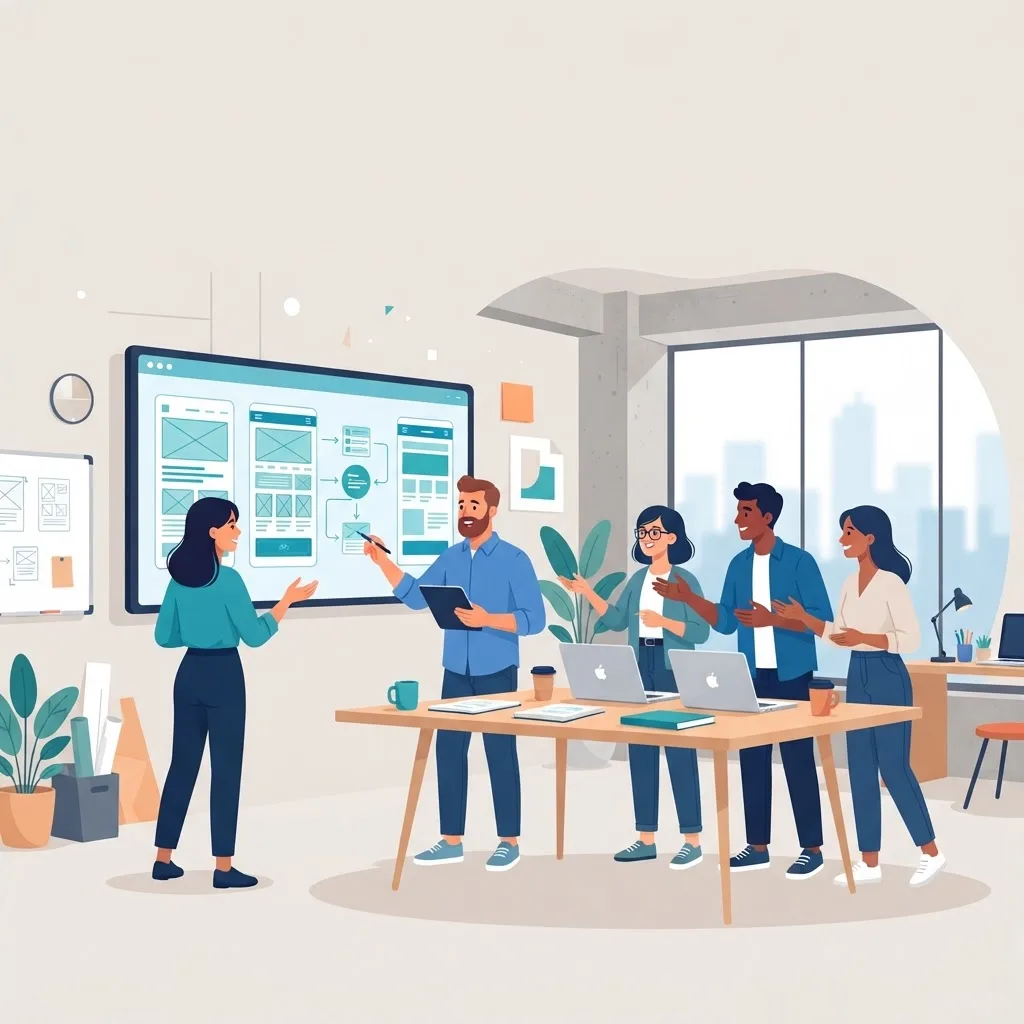
In practice, a strong company operates like a small, focused product team. It brings together specialists who each own a piece of the puzzle, then coordinates their work so the result feels seamless. That's why the same brief handed to a lone generalist and a coordinated team can produce such different outcomes.
Who Works Inside a Web Design Team
Understanding the roles inside a web design company helps you see where your budget goes and why quality varies so much between providers.
UX designers map out how visitors move through your site. They study your audience, sketch user journeys, and build wireframes that prioritize clarity and conversion before a single pixel is polished.
UI and visual designers turn those wireframes into the look and feel of your brand — typography, color, spacing, imagery, and interaction details that make a site feel professional and trustworthy.
Front-end developers translate the designs into fast, responsive, accessible code that behaves identically across browsers and devices. This is where the craft of front-end web development turns a static mockup into a living interface.
Back-end developers build the engine behind the scenes — content management, forms, databases, integrations, and security. Robust back-end web development is what lets a site scale without breaking.
Content writers and SEO specialists make sure the words on the page speak to real people and satisfy search intent, while marketers plan how the site will actually reach an audience through channels like digital marketing.
The Core Services We Provide
A full-service web designer company typically offers a connected set of services rather than a single deliverable. The value comes from how these pieces work together.
Custom website design. Every project starts with a tailored website design built around your brand and goals — never a recycled template. This includes information architecture, responsive layouts, and a design system your team can grow into.
Development across platforms. Depending on your needs, the build might use a flexible content system like a WordPress development setup for easy editing, a modern framework such as React JS or Next JS for high-performance apps, or a headless Strapi CMS build for maximum flexibility.
Content and visual assets. Beyond the site itself, many companies produce supporting assets — from graphic design and infographic design to social media posts and banner design that keep your brand consistent everywhere.
Growth services. The strongest agencies connect design to results with content writing, search optimization, and full-funnel campaigns, so the website becomes part of a larger growth system rather than an island.
How Our Web Design Process Works
Process is where good intentions become reliable results. While details differ, a mature web design company follows a repeatable arc that keeps projects on time and on strategy.
Discovery and strategy. We start by learning your business, audience, competitors, and goals. This phase produces a clear brief — what the site must achieve, for whom, and how success will be measured.
Structure and wireframes. Before any visual design, we map the pages and user journeys. Wireframes let everyone agree on function and flow while changes are still cheap and fast.
Visual design. With structure locked, designers build the look and feel, presenting mockups of key pages so you can react to real screens rather than abstract descriptions.
Development and content. Approved designs are built into responsive, accessible code, and content is written or migrated into place. Quality checks happen continuously, not just at the end.
Testing and launch. We test across devices and browsers, verify speed and accessibility, and only then deploy. A careful launch avoids the broken links and layout surprises that erode trust on day one.
What Sets a Great Web Design Company Apart
Almost anyone can build a website today. What separates a great web design company from an average one is judgment, accountability, and a genuine focus on outcomes.
Great partners ask hard questions early. Instead of nodding along, they push back when a request would hurt your users or your goals. They bring experience from dozens of projects and use it to steer you away from expensive mistakes.
They also design for the long term. A quality build is easy to update, fast to load, accessible to everyone, and structured so search engines can understand it. This aligns directly with Google's guidance on helpful, people-first content and strong page experience — principles that reward sites built with real care.
Finally, great companies stay transparent. You always know what stage your project is in, what it costs, and what comes next. That clarity is often the clearest signal that you're working with professionals.
Ongoing Support After Launch
Launch day is a milestone, not the finish line. Websites are software, and software needs care. The best web design companies offer structured website maintenance and support to keep everything secure, fast, and current.
Ongoing work typically includes security updates, performance monitoring, backups, content updates, and small design improvements based on how visitors actually behave. Over time this steady optimization compounds — a site that's regularly refined will consistently outperform one that's left to stagnate.
Support also gives you a partner to call when something breaks or when your business evolves. Instead of scrambling to find help, you have a team that already knows your site inside and out and can move quickly.
A Real-World Example of How It Comes Together
To make this concrete, imagine a regional accounting firm that comes to a web design company with an outdated site that generates almost no inquiries. A lone freelancer might simply rebuild the pages to look more modern. A full-service company approaches it differently.
During discovery, the team learns that most of the firm's best clients arrive through referrals and then research the firm online before calling. That single insight reshapes the whole project: the site needs to build trust fast, showcase credentials, and make booking a consultation effortless. UX designers map a journey that leads visitors from a clear value proposition to client testimonials to a simple booking form.
Designers craft a calm, professional look that signals reliability. Developers build it on a maintainable WordPress development platform so staff can post articles without a developer. Writers produce plain-English service pages and helpful guides that answer the questions prospects actually search for. Within a few months, the firm sees more qualified inquiries and spends less time explaining its services on the phone.
That's the difference a coordinated team makes: every decision traces back to a business goal, and the pieces reinforce one another instead of working in isolation.
Frequently Asked Questions
1. What's the difference between a web designer and a web developer? A web designer focuses on how a site looks, feels, and guides users, while a developer writes the code that makes it work. A full web design company brings both together so design and function stay in sync.
2. How long does it take to build a website? A focused brochure site might take three to five weeks, while a complex custom site or web application can take several months. Timelines depend on the number of pages, features, and how quickly feedback and content are provided.
3. Do I need a custom design or is a template fine? Templates can work for very simple needs, but a custom design gives you a distinctive brand, better performance, and room to grow. Most businesses that rely on their site for leads or sales benefit from a tailored approach.
4. Will my website be mobile-friendly? Any reputable web design company builds responsive sites that work beautifully on phones, tablets, and desktops by default. Mobile experience is now a core ranking and usability factor, not an afterthought.
5. Can a web design company also handle marketing? Many full-service companies offer content, SEO, and digital marketing alongside design, which keeps your strategy consistent. Bundling these services often produces stronger results than stitching together separate vendors.
6. How much does hiring a web design company cost? Costs vary widely based on scope, from a few thousand dollars for a small site to tens of thousands for a large custom build. The best value comes from matching the investment to the revenue the site is expected to generate.
7. What do I need to provide to get started? Usually your goals, brand assets, examples of sites you like, and access to any existing analytics. A good company guides you through exactly what's needed during discovery so nothing stalls the project.
Final Thoughts
A web designer company is far more than a group of people who make websites look nice. At its best, it's a strategic partner that blends design, development, content, and marketing into a single system built to grow your business. Understanding the roles, services, and process behind that work helps you set realistic expectations and choose a partner who will genuinely move the needle.
If your current site isn't pulling its weight — or if you're starting fresh and want to do it right — the smartest first step is a conversation about your goals. Reach out to our team to talk through your project, and let's build a website that works as hard as you do.