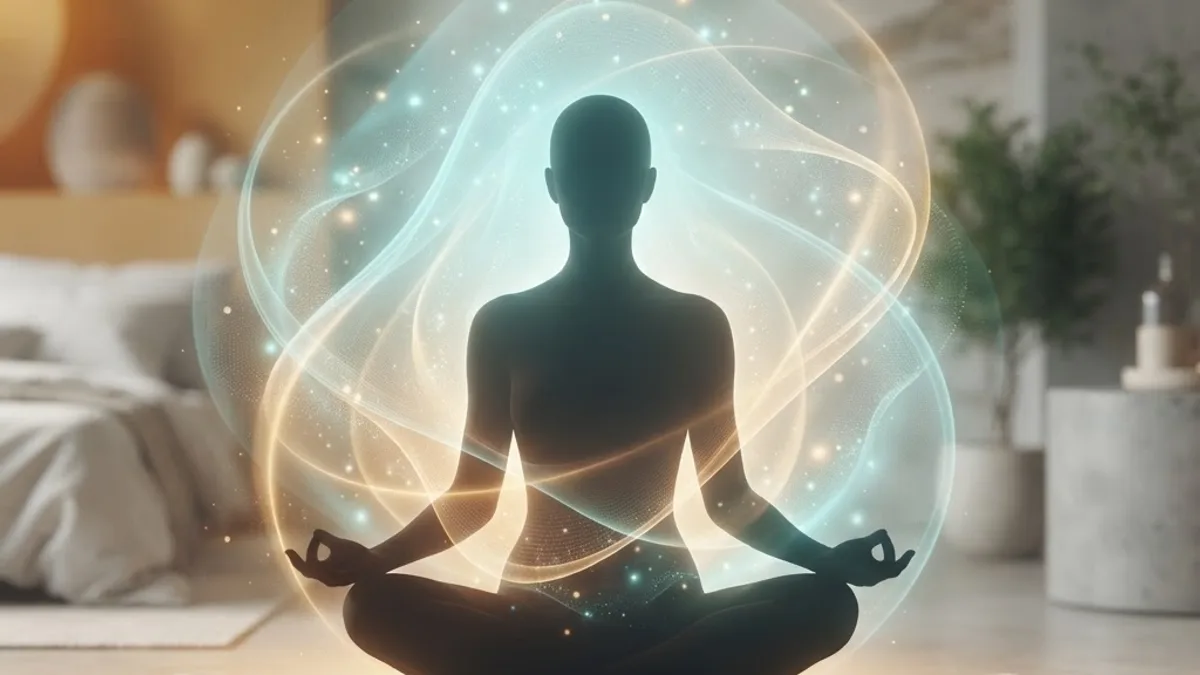
Few wellness terms spark as much curiosity — and as much confusion — as "quantum healing." Search for it and you will find everything from calming meditation practices to bold claims about instantly rewriting your biology. Somewhere between the hype and the skepticism sits a set of ideas worth understanding clearly, so you can decide what, if anything, belongs in your own wellness routine.
This guide explains what quantum healing means, where the concept came from, how practitioners describe it, and what mainstream science actually supports. The goal is not to sell you on a miracle or to dismiss the practice outright, but to give you an honest, well-organized picture so you can make an informed choice.
Table of Contents
- What quantum healing means
- Where the idea came from
- The core principles practitioners describe
- What the science actually says
- Reported benefits and why people try it
- Common criticisms and cautions
- How to explore quantum healing safely
- Frequently asked questions
- Final thoughts
What Quantum Healing Actually Means
Quantum healing is an umbrella term for a group of alternative and complementary practices that claim to promote wellbeing by influencing the body at a subtle, energetic, or "quantum" level. In practice, it usually combines familiar mind-body techniques — deep relaxation, guided visualization, meditation, breathwork, and intention-setting — with the vocabulary of modern physics.
The word "quantum" is borrowed from quantum mechanics, the branch of physics that describes how matter and energy behave at the smallest scales. Practitioners often use it as a metaphor for the idea that consciousness, thought, or intention can shape physical health. It is important to separate that metaphor from the physics itself: the two are not the same thing, and understanding the difference is the key to thinking clearly about the topic.
At its most grounded, quantum healing overlaps heavily with well-studied mind-body medicine. At its most extreme, it makes claims that go far beyond what any laboratory has demonstrated. Most real-world practice falls somewhere in between.
Where the Idea Came From
The phrase was popularized in the late 1980s by physician and author Deepak Chopra, whose book on the subject argued that the mind could influence healing at a fundamental level. The concept drew on older traditions — Ayurveda, meditation, and energy-based practices — and reframed them using scientific-sounding language that resonated with a modern audience.
Since then, "quantum healing" has grown into a broad label applied to many different modalities, including quantum touch, energy healing, and various coaching programs. Because there is no single governing body or standardized definition, what one practitioner means by the term can differ sharply from another. That lack of standardization is part of why the field is so often debated.
The Core Principles Practitioners Describe
While approaches vary, most quantum healing practices share a few recurring ideas. Understanding these helps you recognize what a session or program is actually offering.
The Mind-Body Connection
The first principle is that mental and emotional states influence physical health. This idea is genuinely supported by science: chronic stress affects immune function, sleep, blood pressure, and inflammation. Practices that reduce stress can measurably improve how people feel and, in some cases, how their bodies function.
Energy and Intention
The second principle is that the body has an "energy field" that can be balanced or restored, and that focused intention can guide that process. This is where the practice moves beyond what mainstream science can confirm. There is no measurable "healing energy" recognized by physics, and the term "energy" here is used differently than a physicist would use it.
Consciousness as a Participant
The third principle borrows a genuine curiosity from quantum physics — the observer effect, in which the act of measurement affects a quantum system — and extends it to human consciousness and health. Physicists caution that the observer effect is about measurement interactions at subatomic scales, not about human thoughts changing biology. This extension is metaphorical, not literal.
What the Science Actually Says
Here is the honest summary: the mind-body components of quantum healing are supported by solid evidence, while the "quantum" mechanisms are not.
Decades of research show that meditation, relaxation, and stress reduction produce real, measurable benefits — lower cortisol, improved mood, better sleep, reduced perception of pain, and improved quality of life for people managing chronic conditions. These are not fringe findings; they are mainstream and well documented.
However, the specific claim that intention or consciousness heals the body through quantum-mechanical effects has not been demonstrated in controlled studies. Physicists widely regard the direct application of quantum mechanics to human healing as a misuse of the terminology. When you see dramatic claims — curing disease through thought alone, for example — treat them with healthy skepticism.
The practical takeaway: the benefits people experience from quantum healing are real, but they are most plausibly explained by relaxation, placebo, expectation, and the therapeutic value of focused attention — not by quantum physics.
Reported Benefits and Why People Try It
People are drawn to quantum healing for understandable reasons. Many report feeling calmer, more centered, and more in control of their wellbeing after sessions. Commonly described benefits include reduced stress and anxiety, better sleep, a greater sense of emotional balance, and relief from tension.
Crucially, these benefits are consistent with what any effective relaxation or mindfulness practice provides. If a quantum healing session helps someone slow down, breathe, and release tension, the value is genuine — even if the proposed mechanism is not what is actually doing the work. For many people, the ritual and intention are what make the practice feel meaningful and sustainable.
Common Criticisms and Cautions
The strongest criticism of quantum healing is the misuse of scientific language. Borrowing terms like "quantum," "frequency," and "energy field" can give practices an air of authority they have not earned through evidence. This matters because it can mislead vulnerable people.
The most serious risk is not the practice itself but what it might replace. Quantum healing becomes dangerous when someone delays or abandons proven medical treatment for a serious condition in favor of energy work. Reputable practitioners are clear that their work complements — never replaces — conventional medical care.
Cost is another consideration. Some programs charge premium prices for certifications or sessions with claims that are not supported by evidence. Approach any offer promising guaranteed cures or rapid, dramatic results with caution.
How to Explore Quantum Healing Safely
If you are curious, you can explore the practice thoughtfully. Start by treating it as a complement to, not a substitute for, medical care. Keep your doctor informed about anything you try, especially if you manage a chronic condition.
Choose practitioners who are transparent, avoid guaranteed-cure language, and encourage you to continue conventional treatment. Focus on the components with real evidence behind them — meditation, breathwork, and stress reduction — and notice how you actually feel rather than chasing dramatic promises.
Finally, keep your critical thinking intact. It is completely reasonable to enjoy the calming, grounding aspects of a practice while remaining skeptical of claims that stretch beyond the evidence. Wellness and clear thinking are not opposites.
For businesses and practitioners in the wellness space who want to communicate these nuanced ideas responsibly online, clear and trustworthy content writing makes a real difference, and a thoughtful website design helps present sensitive health topics with the credibility they deserve.
How a Typical Quantum Healing Session Works
Knowing what to expect can demystify the practice. A typical session begins with a conversation about your goals, stress levels, and any physical or emotional concerns you want to address. The practitioner then guides you into a relaxed state, often through slow breathing, gentle spoken cues, or light touch, depending on the modality.
From there, the session focuses on intention and awareness. You may be invited to visualize a sense of ease spreading through your body, to notice areas of tension, and to breathe into them. Some practitioners incorporate hands-on or hands-near-body techniques they describe as balancing your energy. Sessions usually last between thirty and sixty minutes and end with a few quiet moments to reorient before you return to your day.
Whatever the framing, the felt experience is usually one of deep relaxation. That relaxation is real and valuable, regardless of the language used to describe the underlying mechanism.
Quantum Healing vs Evidence-Based Mind-Body Medicine
It helps to place quantum healing next to its evidence-based cousins. Practices such as mindfulness-based stress reduction, guided meditation, progressive muscle relaxation, and clinical hypnotherapy share much of the same toolkit — focused attention, breath, and intention — but they make modest, testable claims and are supported by peer-reviewed research.
Quantum healing borrows these effective techniques but wraps them in bolder, physics-flavored explanations. If you strip away the terminology, the practical core is often indistinguishable from mainstream relaxation therapy. That is why many people benefit: they are receiving genuine mind-body care. The caution is simply to keep the benefits and the explanations separate in your mind, so you can enjoy the former without being misled by the latter.
Frequently Asked Questions
Is quantum healing scientifically proven? The mind-body and relaxation elements are well supported by science. The specific claim that quantum physics heals the body is not proven and is generally considered a metaphor rather than a mechanism.
Can quantum healing cure diseases? No credible evidence shows it can cure diseases. It may help people feel calmer and manage stress, but it should never replace medical treatment for serious conditions.
Is quantum healing the same as Reiki? They are related in that both are energy-based practices, but they are not identical. Quantum healing is a broader umbrella term, while Reiki is a specific modality with its own traditions and training.
Does quantum healing have side effects? The practices themselves — meditation, breathwork, relaxation — are generally safe. The main risk is indirect: relying on it instead of seeking proper medical care.
Is it worth trying? If you enjoy relaxation and mindfulness practices and keep realistic expectations, many people find it valuable as a complementary wellness tool. Keep your healthcare provider informed.
Why is the word "quantum" used at all? It is used metaphorically to suggest that consciousness and intention influence the body. Physicists caution that this is not a literal application of quantum mechanics.
Final Thoughts
Quantum healing sits at the intersection of genuine mind-body wellness and speculative, metaphor-heavy claims. The most honest way to understand it is to embrace what works — relaxation, mindfulness, intention, and stress reduction — while staying clear-eyed about what physics does and does not support.
If you approach it as a complement to good medical care, with realistic expectations and a healthy dose of critical thinking, you can enjoy its calming benefits without being misled by its bolder promises.
Ready to communicate complex wellness topics with clarity and trust? Explore how professional digital marketing and conversion-focused web design can help your practice reach the right audience responsibly.